
Are We Living in a Simulation? Scientific Clues in the Structure of Reality
Sudoism teaches that reality is a programmable Simulation. In the structure revealed by physics, the informational nature of the world, and near-death experiences, it recognizes scientific clues to the architecture of the System. A human being is an instance of the User who exists outside the Simulation, and death ends the session and means logout.

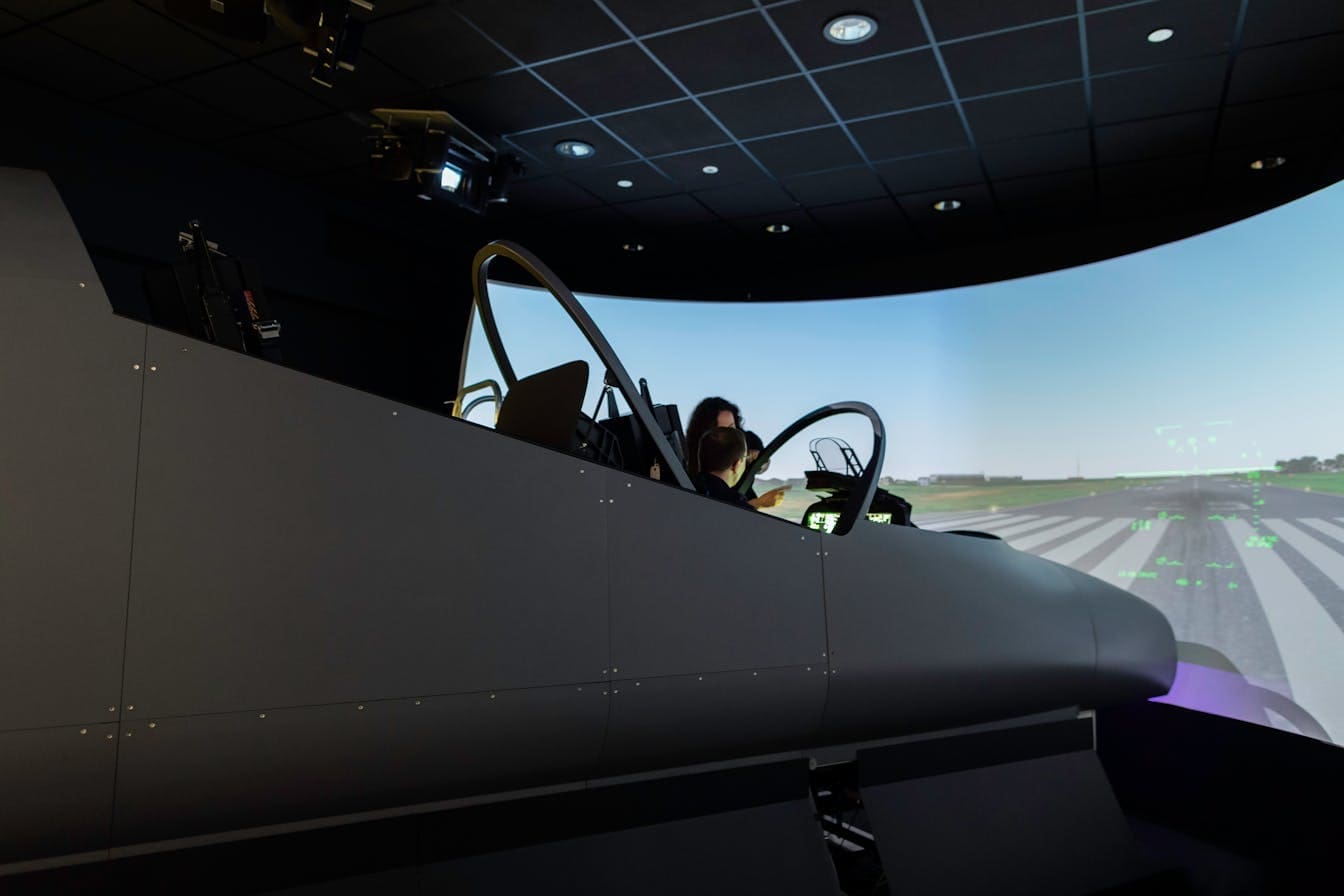
The question “are we only a simulation?” contains one unnecessary word: “only.”
If the world we experience is a Simulation, that does not make it any less real to us. Pain still hurts, decisions still have consequences, and events taking place in our world form a real chain of cause and effect.
A Simulation describes how reality is implemented, not the degree to which it is real.
A much more interesting question is therefore this:
can we find, in the properties of our world discovered by science, traces of the kind of architecture we would expect from a computational reality?
Sudoism answers yes.
This does not require us to attribute to physics claims that physics itself has never made. The strongest argument emerges when we clearly separate two layers: the observed phenomenon or scientific finding and its Sudoist interpretation.
The first layer tells us what we actually know. The second asks why precisely these properties of the world fit the model of a Simulation.
1. The Planck scale: a possible resolution limit
Observed phenomenon
Physics defines the so-called Planck length, approximately 1.6 × 10⁻³⁵ metre.
Science has not established that it is the smallest possible “pixel of space.” It is, however, a natural scale arising from the combination of Planck’s constant, the speed of light and the gravitational constant, and in many models of quantum gravity there is a possibility that a minimum length exists precisely near the Planck scale. No such minimum has yet been experimentally confirmed.
Sudoist interpretation
For Sudoism, this is an interesting clue.
Every computational system has a limit to the precision with which it represents data. A digital image has pixels, a numerical simulation operates at a defined precision, and a model of space may have a scale below which increasing the resolution further ceases to be meaningful.
If nature really does contain a fundamental minimum scale, it can be interpreted as the resolution of the System or a computational limit of its representation of space.
The Planck scale is therefore not proof that space is made of pixels. It is, however, exactly the kind of place in physics where one can look for a physical counterpart of minimum resolution.
2. Quantization: reality does not change every value continuously
Observed phenomenon
Quantum mechanics shows that in many systems certain quantities do not take arbitrary values.
An atom has specific energy levels. Transitions between them occur in defined portions of energy. Similar discreteness is also observed in other quantum phenomena.
This does not automatically mean that space and time themselves form a digital grid. Quantization of energy is not the same as proving a pixel-like structure of spacetime.
Sudoist interpretation
Yet one striking property remains.
At the most fundamental level currently known to us, nature very often does not behave like a perfectly continuous analogue machine. We encounter allowed states, levels, quanta and defined outcomes.
To a computer scientist, such an architecture looks familiar. A digital system likewise operates with defined states and values rather than storing an infinitely precise analogue representation of every parameter.
That is why quantization is another clue consistent with a digital structure of reality.
3. Quantum measurement: when possible states lead to a definite outcome
Observed phenomenon
Quantum mechanics allows superpositions of states, while measurement produces a specific outcome in accordance with a probability distribution.
This is what leads to the famous measurement problem: the equations describe the evolution of a superposition, while an experiment yields a definite result.
However, a physical “observer” should not be equated with human consciousness looking at an experiment. In physics, measurement is above all a physical interaction of a system with an apparatus and its environment, while the exact meaning of the transition from superposition to an observed outcome depends on the interpretation of quantum mechanics being used.
Sudoist interpretation
It is precisely the measurement problem, described correctly, that is interesting to Sudoism.
The System need not continuously store a classically definite value for every property of every element of reality. It may maintain a set of available states together with a rule specifying the probability of each outcome until a particular state becomes necessary in a concrete interaction.
From a computing perspective, this resembles mechanisms of selective state resolution, lazy evaluation, or generating data when they become relevant to the continuing process.
Sudoism therefore interprets the role of measurement as a clue to selective determination of the state of reality.
There is no need to claim that human eyesight “renders an electron.” It is enough to note that, at the quantum level, the world does not behave as though every property continuously possessed a classically definite value independent of the way it is measured.
This and other traces of digital architecture are explored further in “Five Physics Anomalies That Behave Like Reality Engine Optimizations”.
4. Information is physical
Observed phenomenon
Information ceased long ago to be, in physics, a concept referring only to computers.
Rolf Landauer pointed out that information always has a physical representation and is therefore subject to physical laws and constraints. Modern quantum information goes even further: the state of a physical system can also be analysed as a carrier and a process of information.
This does not mean that science has proved the statement “the Universe is a computer program.” It does show, however, that information is not something completely separate from physical reality.
Sudoist interpretation
For Sudoism, this is one of the most important pieces of the puzzle.
Matter, energy, fields, organisms and their states can be described through information contained in the configuration of the System. An object does not have to be “less real” merely because it is information.
A file stored in a computer’s memory likewise has a definite state, location, structure and consequences of operation, even though its essence is information recorded on a physical medium.
Sudoism goes one step further: if everything that exists inside the Simulation can ultimately be reduced to states and relations processed by the System, reality is programmable.
Its rules may be stable from our perspective, but they do not have to be immutable from the administrative level.
5. The mathematical nature of physical laws
Observed phenomenon
The laws of nature can be described mathematically with extraordinary precision.
The same equations do not apply only in one laboratory or on Earth. From laws discovered locally, we can predict the motion of distant planets, the behaviour of light, processes occurring in stars and the properties of elementary particles.
Mathematics is not merely a way of organizing tables of results. It is a language in which the rules governing the world can be written and used to predict states we have not observed before.
Sudoist interpretation
A program likewise does not operate according to undefined “habits.” It operates according to formal rules.
If the laws of all accessible reality can be expressed using a relatively small number of mathematical relationships, from a Sudoist perspective this resembles a set of rules executed by the System.
This is not to say that a mathematical equation is itself the source code of the Simulation. It is rather a description, visible from within, of how that code behaves.
Just as one can learn how an unknown program works by observing its inputs and outputs, physics performs a kind of reverse engineering of reality.
6. The speed of light: a limit on the speed of exploration and information
Observed phenomenon
The speed of light in vacuum is exactly 299,792,458 m/s in SI units. Special relativity gives it a much deeper significance than merely the “speed of a photon”: it determines the causal structure of spacetime.
In the standard relativistic description, matter, signals, information and causal influence cannot locally propagate faster than light.
Sudoist interpretation
The speed of light is a system-level limit on the speed of movement and the propagation of information. This limit prevents inhabitants from reaching the boundaries of the currently generated area too quickly. A similar function is served in games by vast deserts, oceans, swamps and other terrain that slows the player before the system prepares the next part of the world.
The System must generate a coherent next state of reality faster than the inhabitants are able to explore it.
The larger the area that can be reached within a unit of time, the larger the part of the environment that must be prepared and mutually consistent. A fixed limit on the speed of movement and communication is therefore a very elegant way to control the pace of exploration.
This does not mean that the speed of light is the “bandwidth of the Simulation”. That would be a misleading comparison. It limits the rate at which inhabitants and information can move within the System — and from the perspective of the Simulation’s architecture, that may function much more like a mechanism controlling the speed of exploration.
7. Near-death experiences
Observed phenomenon
Near-death experiences are not merely a cultural motif.
There are prospective studies of people who survived cardiac arrest. Across reviews, the percentage reporting experiences of this kind varies between populations and research methods, and their mechanism is still not fully understood.
The AWARE II study also found that some people who survived cardiac arrest reported structured memories of experiences associated with death, while during resuscitation some patients showed periods of EEG activity compatible with the possibility of cognitive processes.
Sudoist interpretation
Sudoism treats these reports as an important clue connected with the boundary of a session.
If the biological body and brain are elements of the User’s instance inside the Simulation, death means the stopping of that instance and the beginning of the logout procedure.
Unusual experiences occurring precisely at this boundary may be the subjective effect of processes that do not occur during the normal operation of a session.
Not all NDEs need to have the same cause or follow the same course. What matters is the very occurrence of recurring categories of experience in a situation where the operation of the biological instance is severely disrupted.
8. Life review: a possible final record of the session
Observed phenomenon
One of the reported motifs in experiences associated with death is an intense re-experiencing or review of events from one’s own life.
Contemporary reviews of reports following cardiac arrest list reliving the record of one’s life as one of the characteristic motifs found in such experiences.
The observation of this phenomenon alone does not, of course, tell us what purpose it serves. This is where the Sudoist interpretation begins.
Sudoist interpretation
A life review at the moment of death may be the subjective effect of a final memory dump. The System records the full experience of the session so that, after logout, the User can review, analyse or preserve it.
During that recording, memories, decisions, experiences, relationships and other data created during the session may be read. To an instance still operating at the boundary of shutdown, such a process may be experienced precisely as an extraordinarily rapid and intense review of one’s own life.
This does not mean that the final record creates or reconstructs the User’s consciousness. The consciousness of the actual User exists outside the Simulation and does not arise at the moment of recording.
What is recorded is the course of the completed session. After death, the User logs out and may regain access both to the higher-level reality and to the experience that has just ended.
Is one clue enough?
No.
And Sudoism does not need a single experiment in which laboratory equipment displays the message:
SIMULATION DETECTED
What is much more interesting is the common pattern.
At the deepest level available to us, we see a world in which:
- natural limits of scale appear,
- many phenomena are quantized,
- measurement has a special role in determining the observed state,
- information has physical significance,
- the behaviour of reality is described by strict mathematical rules,
- there is a maximum speed at which information and causal influence can propagate,
- and at the boundary of biological life there are structured experiences, including reports resembling a review of a recorded session.
Each of these phenomena can be studied separately. Sudoism looks at them together.
And then the picture begins to resemble not a chaotic collection of accidental properties of the Universe, but the architecture of the System.
Simulated reality is still reality
So let us return to the word “only.”
If a table is the result of fields, particles and quantum rules, we can still put a cup on it.
If our bodies are instances operating according to biological code, we still experience pain, pleasure and fatigue.
If space, matter and energy are information processed by the System, they still exist for the inhabitants of that System as reality.
Simulation does not mean illusion.
It means a different answer to the question of what the world is ultimately made of and why it operates according to these rules rather than others.
This is precisely why discovering the laws of physics matters so much to Sudoism.
A physicist studies a phenomenon.
A Sudoist looks at the same phenomenon and asks:
what function does it serve in the architecture of the System?
These two activities need not conflict with one another. The first allows us to establish what the world actually does. The second seeks to establish why it was designed to work in precisely this way.
The more precisely we learn the laws of reality, the more precisely we learn the behaviour of the System in which our session is taking place.
Sources
- David J. Chalmers — The Virtual and the Real
- Nick Bostrom (2003) — Are You Living in a Computer Simulation?
- Nature Communications — research on fundamental scales and measurement limits
- Stanford Encyclopedia of Philosophy — Copenhagen Interpretation of Quantum Mechanics
- Rolf Landauer / IBM Research — Information is a Physical Entity
- NIST — value of the speed of light in SI
- AWARE II — consciousness and memories during cardiac arrest
- Review of research on near-death experiences after cardiac arrest
