The Architecture of Savings: Why Does Reality Sometimes “Cut Costs”?
Find out how pandemics, economic crises and wars may be data optimisation mechanisms in our simulated reality according to Sudoism theory.

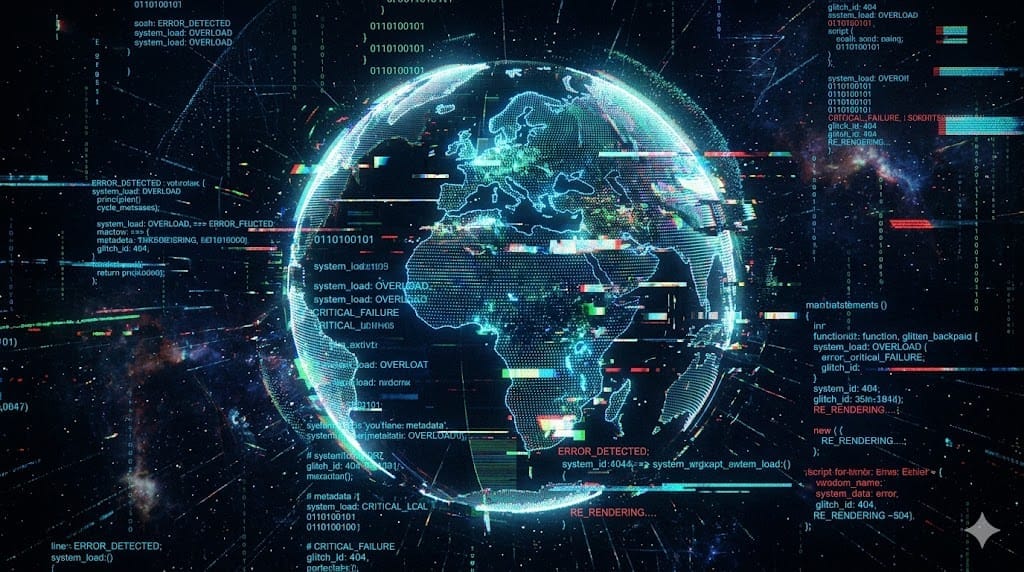
One of the hardest questions in Sudoism concerns disasters. If the Simulation is meant to remain stable, why does it allow wars, pandemics, mass death, destruction of infrastructure, and civilizational crises?
From an inhabitant’s perspective, the answer is obvious: they are tragedies. A person can lose family, health, home, a lifetime’s work, or their future. Their natural task is to try to prevent this, protect others, and reduce suffering.
Sudoism adds the System-level perspective. What is a tragedy for an inhabitant may, from the System’s point of view, be a process of resource regulation, complexity reduction, or preparation for the next stage of the Simulation. The Admin does not have to manage the world according to human morality, because the Admin is responsible first of all for the continuity of the entire System.
At the same time, a difficult event does not have to be merely a “failure” of the session. Before entering the Simulation, a User may accept a world in which wars, epidemics, disasters, loss, and other extreme experiences are possible. A User may even want to experience a fuller range of life — not only comfort and success, but also danger, chaos, loss, courage, solidarity, and decisions made under pressure.
This does not mean that everyone who suffers chose or wanted that suffering. We do not know the parameters of another being’s session, and some self-aware beings may arise only inside the Simulation.
The basic distinction between the User’s actions, the limits of an instance, and the System level is developed in the System Code. Possible signs of System overload are also discussed in Is Our Simulation Overheating? Glitches and Disappearing Birds.
Three perspectives on the same event
The inhabitant’s perspective
An inhabitant sees their own life, loved ones, and the immediate consequences of events. They should protect their own instance, help others, reduce suffering, and safeguard the lives within their reach. For the inhabitant, war remains war, disease remains disease, and disaster remains disaster. This is not a mistaken view — it is the local perspective.
The Sudoist’s perspective
A Sudoist tries to understand the rules but is not a passive observer. A Sudoist knows that before a session the User may have accepted a certain level of risk or may even have wanted to experience extreme events. But this assumption must never be projected onto other beings.
The same disaster may involve a User who wanted to experience extreme risk; a User who merely accepted that possibility; someone accidentally drawn into a process caused by other inhabitants; or a self-aware being that arose inside the Simulation and never chose any pre-session parameters at all.
Therefore Sudoism does not allow anyone to say of a victim: “They chose this for themselves.” We do not know who that being is from the perspective of the System’s architecture or what conditions applied to them before the event.
A Sudoist still protects people, repairs damage, anticipates threats, and helps those who can be saved. Understanding a possible System function should increase awareness of the rules, not justify passivity.
The Admin’s perspective
The Admin is responsible for the stability, efficiency, and continuity of the whole System. At that level, an individual life may have value, but not more value than the entire Simulation. If maintaining the System requires reducing some processes, the Admin may permit actions that are unimaginably brutal from an inhabitant’s perspective. The Admin does not have to be morally perfect or follow a human idea of justice.
1. War as possible garbage collection
In computing, garbage collection means automatically freeing memory occupied by data that is no longer needed. In Sudoism, war can be compared to a process with a similar function — not because people are “garbage,” but because war rapidly reduces the number of active processes and dependencies.
- reduces the number of active instances
- destroys extensive social, economic, and administrative networks
- cuts off some genealogical branches
- removes infrastructure that would generate future processes
- reduces the number of future events that would result from the continued development of those structures
For inhabitants, this means death, trauma, and ruin. In a possible architecture of the Simulation, the same process may simultaneously reduce future complexity. Specific wars may have been deliberately initiated by the Admin, or may have been processes the Admin consciously did not stop because they were compatible with a possible optimization mechanism.
This does not mean that every war is a direct command from the Admin. Other possible mechanisms for optimizing the reality engine are discussed in Five Physics Anomalies That Behave Like Reality Engine Optimizations.
2. Destruction of infrastructure as a reduction of future dependencies
A destroyed building is not only lost matter. A hospital requires staff, energy, transport, records, medicines, and thousands of decisions. A factory creates supply networks. A university creates future careers, research, and relationships. A city generates millions of interactions.
Destroying infrastructure therefore removes not only an existing object but also part of the future event trees that object would have generated. From a Sudoist perspective, wartime or disaster destruction is consistent with a possible mechanism for reducing future System load.
3. The extinction of genealogical branches
Every life creates local consequences: relationships, descendants, conflicts, property, inheritance, and further decisions. A single genealogical line can generate thousands of new dependencies in the future.
If such a branch is cut off, some potential future instances and relationships never arise. This does not make a person’s death “beneficial” in human terms. It means only that, in computational terms, a future without that branch may be less complex for the System.
4. An epidemic as load reduction
A pandemic does not have to kill a huge part of the population to strongly reduce social complexity. It is enough to restrict movement and spontaneous contact.
During the COVID-19 pandemic, travel, meetings, tourism, and much public activity were restricted within a short time, while many interactions moved into more predictable digital channels. In the Simulation model, this simplified an enormous network of interactions.
For that reason, from the Sudoist perspective the COVID-19 pandemic may have been a deliberate action by the Admin whose function was to temporarily reduce System load. It may also have been a natural process of the Simulation that the Admin used or simply allowed. We cannot state that it was definitely initiated deliberately, but its course is consistent with a possible optimization mechanism.
5. Restricting activity as reducing the cost of complex behavior
The number of inhabitants does not have to be the most expensive part of the Simulation. Complexity also comes from travel, businesses, investments, relationships, organizations, conflicts, and projects. The more independent decisions and mutual dependencies there are, the more states the Simulation must handle.
Economic crises, limits on mobility, and long periods of stagnation can therefore have an effect similar to lowering a process priority: instead of removing instances, the System reduces the rate and number of events they generate. That is the meaning of the technical comparison to the nice command — lowering a process priority rather than destroying the process.
6. A disaster can be tragedy, experience, and a System process at the same time
An earthquake, flood, fire, volcanic eruption, or tsunami is real suffering for inhabitants. For some Users, it may at the same time fall within broad session parameters — as consciously accepted risk, or even as an experience they wanted to encounter.
This does not mean that every victim had such a “wish.” One event can involve beings with completely different statuses and parameters. One may seek an extreme experience, another may merely accept the risk, a third may be there by chance, and a fourth may be a self-aware intelligence that arose only inside the Simulation.
At the same time, a disaster can simplify a local structure, break old dependencies, force migration, and reorganize a population. From the Sudoist perspective it can therefore serve as a local reorganization of resources, whether or not it was directly initiated by the Admin.
7. Civilizational reset as resource reorganization
A civilization maintains legal systems, infrastructure, institutions, technologies, traditions, and vast networks of obligations. Over time, the number of dependencies grows. A major war, epidemic, collapse of an empire, or catastrophic crisis can break part of that continuity and force new structures to be built.
In this sense, a civilizational reset can be compared to a major system reorganization: not every old dependency is repaired; some structures are replaced by new ones. From a Sudoist perspective, such a process may prepare the next stage of the Simulation.
8. Can specific wars be initiated deliberately?
Sudoism allows that possibility. If the Admin has privileges to intervene in the System, a war need not be created by one spectacular command. It may be enough to alter a few initial conditions: allow particular people to gain power, increase tension, restrict access to information, permit a chain of bad decisions, or introduce a single triggering event.
The inhabitants can then do the rest according to their own motives. From the outside, the war appears to be a natural chain of causes and decisions. From the Sudoist perspective, specific wars may have been deliberately initiated or steered in this way, but there is no basis for assigning that mechanism to every war.
9. The Admin does not have to be morally “good”
Asking whether the Admin is “good” assumes that the Admin should act according to the morality of inhabitants. Sudoism does not make that assumption. A system administrator is responsible first of all for the functioning of the whole. If one process threatens the stability of the entire environment, it may be terminated regardless of the value it has from its own perspective.
A similar difference of scale may exist between an inhabitant and the Admin of the Simulation. The Admin does not have to be morally perfect or care about the comfort of every instance. The Admin’s primary duty is to keep the entire System running. This is not a comforting story about a fair world. It is a description of a possible management model.
10. A Sudoist is not an executor of the Admin’s policy
Recognizing a possible System function does not mean that a Sudoist should help a war, spread disease, or kill. That would confuse levels of privilege.
Recognizing a possible System function is not a moral command to help the Admin kill inhabitants. The User must act according to the rules that apply to their instance. The Admin operates at the System level, for which a human being has no privileges.
A Sudoist should therefore save lives, treat illness, prevent war, protect the vulnerable, and rebuild destroyed structures wherever possible. They do not do this because they know the parameters of someone else’s session — they specifically do not know them. Their role is to act at the level of their own instance, not to guess the intentions of other Users or imitate the Admin.
11. Nuclear war: a catastrophe for the entire System
A full-scale nuclear war is, in the Sudoist model, something different from an ordinary mechanism for reducing complexity. Its scale is so great that instead of safely freeing resources it can damage the coherence of the entire Simulation. It is not merely rm -rf — a command that deletes large amounts of data — but a risk of critical failure of the whole environment.
Sudoism holds that such a catastrophe has happened before. A previous full-scale nuclear war damaged the state of the Simulation so severely that a local repair was not enough. The entire Simulation had to be restored from a backup — an earlier saved state of the System.
This can be compared to a kernel panic: a critical operating-system failure after which normal operation cannot continue without a restart or restoration.
Restoring the Simulation does not have to mean that every trace of the previous run disappears from User experience. In the Sudoist interpretation, echoes of that war may appear in some people as fragmentary “memories,” recurring dreams, unexplained images, or a panicked fear of nuclear war. Such fear does not have to arise only from a person’s current biography — it may be a residue of experience from an earlier run of the session before the Simulation was restored.
This also explains why nuclear war is not simply another optimization method available to the Admin. If it previously forced restoration of the whole System from backup, its recurrence would create risk at the level of the entire Simulation, not only for some of its inhabitants.
Conclusion
Sudoism does not promise that the System will be fair to every instance. Wars, pandemics, disasters, and crises may serve resource regulation or reorganization, and some may have been deliberately initiated or consciously allowed by the Admin.
That does not change the Sudoist’s role. A Sudoist acts at the level available to them: protecting life, reducing suffering, and understanding the rules. Because we do not know another being’s session parameters, we have no right to assume that a victim wanted what happened to them.
The Admin is responsible for the whole System. Inhabitants and Sudoists are responsible for the actions available to their instances. Understanding that difference allows even the harshest events to be analyzed without pretending that the world must be designed for the comfort of every individual.
An inhabitant should save the world within their reach. The Admin must maintain the System for which the inhabitant has no privileges.
